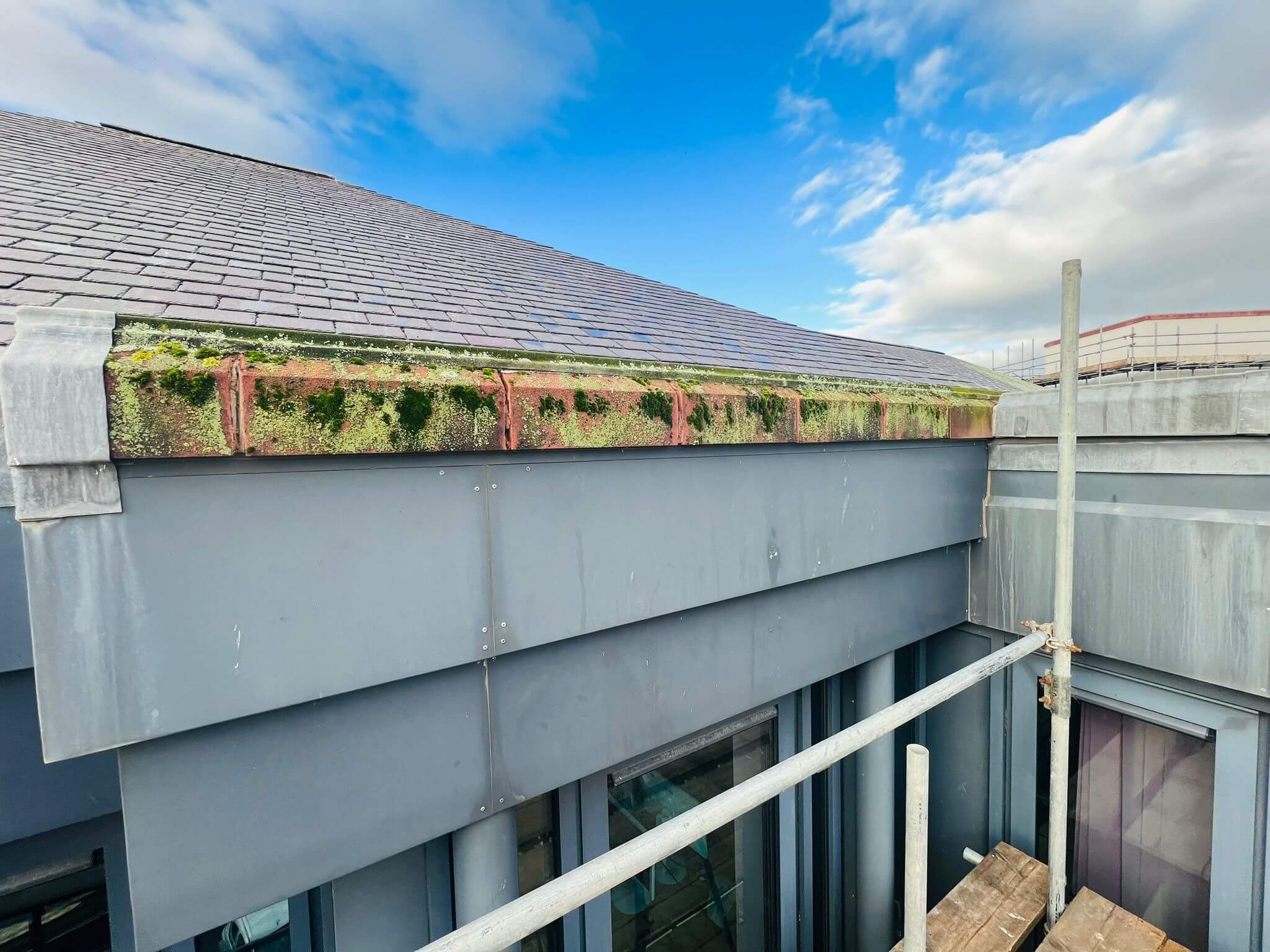
Roof cleaning is often associated with spring and summer, but winter can also be a good time to have a roof professionally cleaned when weather conditions are suitable. Moss, algae and lichen remain visible throughout the colder months, fallen leaves can expose areas of the roof that were previously shaded by trees, and winter weather can make existing organic growth and blocked gutters particularly noticeable.
That does not mean every winter day is suitable for roof cleaning. Freezing temperatures, high winds, heavy rain and other adverse conditions can affect whether work can be carried out safely and effectively. At Servos Exterior Cleaning, our approach to professional roof cleaning is based on the condition of the individual roof and the conditions at the time, rather than assuming there is one perfect season for every property.

Can you have your roof cleaned in winter?
Yes, roof cleaning can be carried out during winter, providing the weather, roof condition and access requirements allow the work to be completed appropriately. Professional exterior cleaning companies work throughout the year, but conditions need to be assessed before roof work goes ahead.
A dry, relatively mild winter day may provide perfectly suitable conditions, while frost, ice, strong winds or prolonged heavy rain could mean that cleaning should be postponed. Working at height is already a specialist activity, and winter weather can introduce additional considerations, particularly where roof surfaces become wet, icy or slippery.
Rather than deciding that a roof can or cannot be cleaned simply because of the month, the sensible approach is to consider the actual conditions on the property and the cleaning method being proposed.
Why moss can become more noticeable during winter
Moss thrives in damp, shaded conditions, which is why it is such a common problem on UK roofs. Properties surrounded by trees, roofs that receive limited direct sunlight and sections that remain damp for extended periods can be particularly susceptible. During autumn and winter, fallen leaves and wetter conditions can also make moss and accumulated organic debris more noticeable.
The amount of growth can vary considerably across a single roof. One elevation may remain relatively clear while another develops substantial moss because it receives less sunlight or takes longer to dry following rainfall. This is one reason a professional assessment is useful before deciding how the roof should be cleaned.
If moss has become established across a large part of your roof, our guide on how to clean moss off a roof explains how professional moss removal can form part of the cleaning process.
Winter can highlight gutter and drainage problems
One of the practical reasons roof maintenance receives more attention during autumn and winter is the increased rainfall. Moss, leaves and other organic debris can accumulate in guttering and around drainage points, and problems often become much more obvious when gutters begin overflowing during periods of heavy rain.
If substantial moss is removed from a roof, the gutters should also be considered because loose material may already have collected within them. Combining roof cleaning with professional gutter cleaning where required can provide a more complete approach to the roofline, particularly during the wetter months.
Fascias and soffits can also be cleaned where appropriate, allowing the roof and surrounding exterior areas to be addressed as part of the same project.
Does roof cleaning work in colder weather?
The answer depends partly on the cleaning process being used and the conditions on the day. Professional roof cleaning can involve different methods, including careful moss removal, low-pressure softwashing, specialist steam cleaning and appropriate treatments. Not every method will be suitable for every roof or every set of weather conditions.
Temperature, rainfall and the condition of the roof therefore need to be considered before work starts. This is another reason we avoid applying a standard process to every property. At Servos, the roof covering, condition, contamination and environmental conditions are assessed before an appropriate cleaning method is selected.
Our guide to the professional roof cleaning process explains how assessment, moss removal, cleaning and the final stages of a professional project fit together.
When shouldn’t a roof be cleaned during winter?
There will be winter days when roof cleaning should not proceed. Ice or frost can make roof surfaces and access equipment hazardous, while high winds can create additional risks when working at height. Persistent heavy rain can also make some cleaning work impractical or inappropriate.
The exact limits depend on the property, access method, cleaning process and conditions, so decisions should be made by the professionals carrying out the work rather than relying on a fixed seasonal rule. If conditions are unsuitable, postponing the work until an appropriate weather window is the sensible approach.
This is particularly important because roof cleaning should never prioritise completing a job quickly over safe access and an appropriate cleaning process.
Should you pressure wash a roof in winter?
Winter does not change the basic principle that maximum water pressure is not automatically the best way to clean a roof. The material and condition of the surface need to be considered regardless of the season.
Where significant moss has developed, careful removal may be more appropriate before further cleaning or treatment takes place. Depending on the roof, low-pressure softwashing or specialist steam cleaning may also form part of the process. Our guide explaining why you should avoid high-pressure washing for roof cleaning looks at why an assessment-led approach is preferable to simply using the most powerful equipment available.
What about slate roofs during winter?
Natural slate roofs are particularly common across North Wales, and the roof material needs to be taken into account before any cleaning method is selected. The age and condition of the slate, fixings, organic growth and general condition of the roof can all influence the appropriate approach.
Winter itself does not automatically prevent a slate roof from being cleaned, but suitable weather conditions and an appropriate method remain essential. Older slate roofs should not simply be treated in the same way as a modern tiled roof without first considering their individual condition.
Our dedicated guide to roof cleaning for slate roofs explains the considerations in greater detail.
Is winter better than spring or summer for roof cleaning?
There isn’t one season that is universally best for every roof. A roof that has significant moss growth does not necessarily need to wait until summer simply because warmer weather is approaching, and equally there is little reason to insist that cleaning takes place in winter if conditions are unsuitable.
The condition of the roof is more important than the season. If moss, algae, lichen or staining has become significant, or large amounts of organic material are collecting in the gutters, it may be worth arranging an assessment. The cleaning contractor can then consider the roof and current conditions before recommending when and how the work should be completed.
The same principle applies to cleaning frequency. There is no need to arrange roof cleaning every winter or every spring simply because a certain amount of time has passed. Our guide on how often a roof needs cleaning explains why the individual property’s condition should guide this decision.
Winter roof cleaning for commercial buildings
Winter cleaning can also be considered for commercial properties, although larger buildings may introduce additional access and operational requirements. Commercial roofs can cover substantial areas and work may need to be planned around employees, customers, deliveries and normal site activity.
Servos provides commercial roof cleaning for businesses, property managers and organisations, with each project assessed individually. Suitable weather conditions, roof material, contamination, access and the way the site operates are all considered when planning the work.
For more information about these additional considerations, read our guide to professional roof cleaning for commercial buildings.
Do you need to wait until spring?
Not necessarily. If your roof is heavily affected by moss, algae or other organic growth, there is no reason to automatically ignore it throughout winter and wait for a particular date on the calendar. Suitable winter weather can provide opportunities for professional roof cleaning, while an assessment can establish what work is required and whether conditions are appropriate.
Likewise, there is no need to clean a roof during winter simply for the sake of doing so. The amount of contamination, roof condition and circumstances of the individual property should determine whether cleaning is worthwhile.
Contact Servos about winter roof cleaning
If your roof is affected by moss, algae, lichen or staining this winter, contact Servos Exterior Cleaning for a free, no-obligation quote. Our experienced team provides professional roof cleaning throughout the year when conditions are suitable, with each roof assessed before an appropriate cleaning method is recommended.
Call 01745 289055 or email hello@servosuk.co.uk to discuss your property with our team.
Roof cleaning areas we cover
Servos provides professional roof cleaning for homes and businesses across North Wales and the North West. Our roof cleaning services are available throughout North Wales, Bangor, Chester, Wirral, Liverpool, Warrington, Northwich, Crewe, Macclesfield, Altrincham, Sale, Stockport and Bury, as well as surrounding areas.