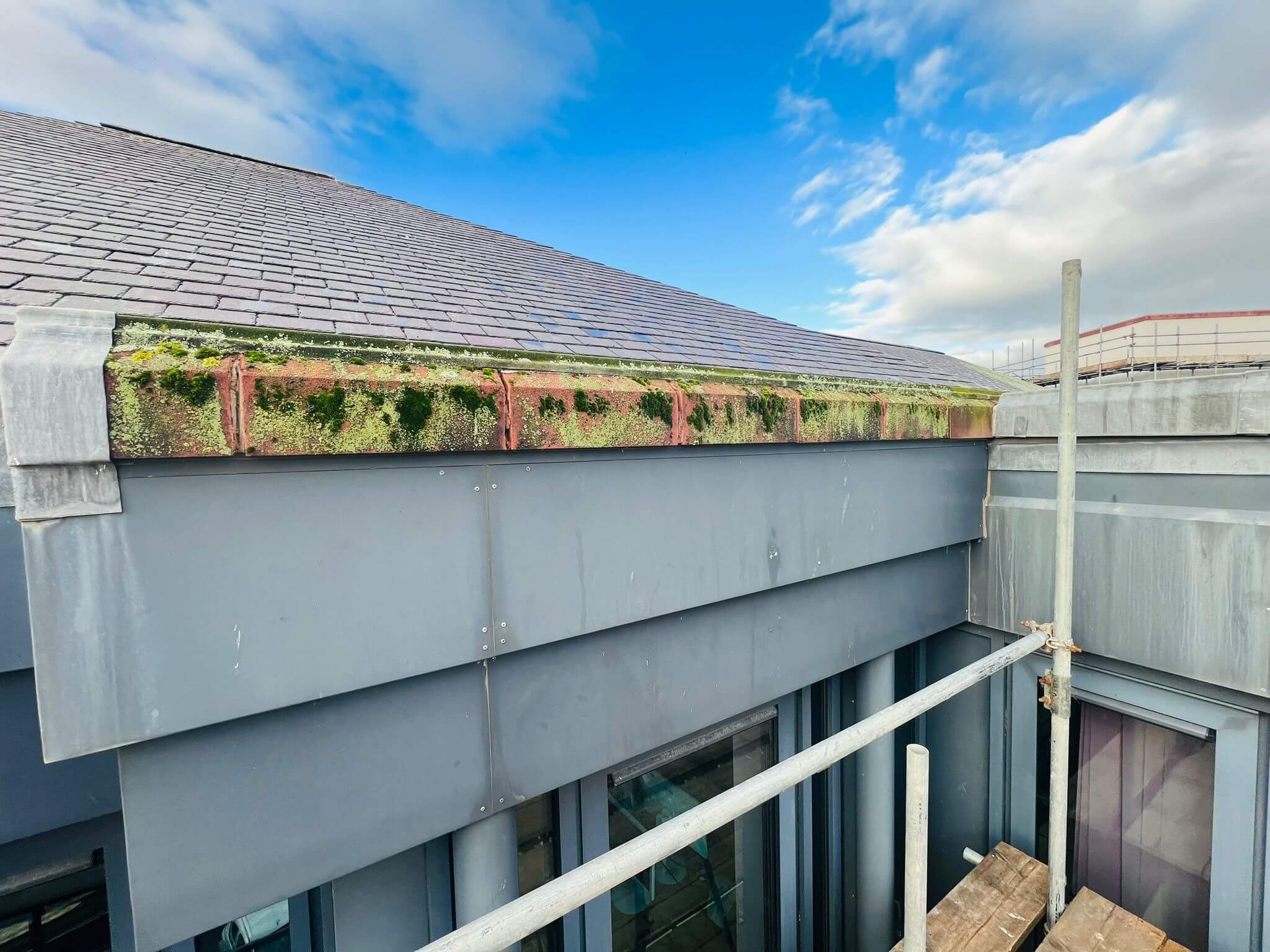
When a roof is covered in moss, algae, lichen or staining, using a powerful pressure washer can seem like the quickest way to clean it. High-pressure water can certainly remove visible contamination, but more pressure does not automatically mean a better roof clean. Depending on the roof covering, its age and condition, using excessive or inappropriate pressure can be unsuitable and may create unnecessary risks for the surface.
Professional roof cleaning should therefore begin with an assessment of the property rather than automatically reaching for the highest pressure setting. At Servos Exterior Cleaning, we consider the roof material, condition and type of contamination before selecting an appropriate cleaning method. This can include careful moss removal, low-pressure softwashing, specialist steam cleaning or another suitable approach depending on the individual roof.
Is it safe to pressure wash a roof?
There isn’t a simple yes or no answer because roofs vary considerably. Water pressure that may be appropriate in one situation could be unsuitable for another, particularly where the roof covering is older, weathered or requires a more considered cleaning approach. The equipment being used, pressure, distance from the surface and experience of the operator can all influence the outcome.
This is why we would not recommend treating pressure washing as a universal roof cleaning method. A professional contractor should assess the roof before deciding whether water pressure has a role in the cleaning process and, if it does, how it should be used. The objective should be to remove the contamination effectively while taking the characteristics and condition of the roof surface into account.
Why can excessive pressure be a problem?
Roof coverings are designed to withstand years of exposure to the weather, but that does not mean every surface should be subjected to concentrated high-pressure water at close range. Different roof materials have different characteristics, and their condition can also change considerably as they age.
Using excessive pressure may be particularly inappropriate where tiles are already weathered or where the roof has areas that require additional care. Rather than assuming more force will produce a better result, professional roof cleaning should focus on selecting a method that is suitable for the contamination and the surface being cleaned.
The condition of the roof also matters. Cleaning should not be treated as a way of correcting cracked tiles, defective flashing, leaks or other existing roofing problems. Where visible concerns are identified during the initial assessment, they should be taken into account before cleaning proceeds.
What is the best way to remove moss from a roof?
Moss is one of the most common reasons customers contact us about roof cleaning. Where thick growth has developed, it may be more appropriate to carefully remove larger moss deposits before using a suitable cleaning process or treatment for the remaining organic contamination. This avoids relying solely on powerful water pressure to blast established moss from the roof.
The exact approach will depend on the roof covering and its condition. Some roofs may require significant moss removal, while others are affected more by algae, lichen or staining than thick moss growth. Our guide on how to clean moss off a roof explains how professional moss removal can form part of the wider roof cleaning process.
What is softwashing?
Softwashing is a cleaning approach that uses lower water pressure alongside appropriate cleaning treatments to target organic contamination. Depending on the surface and circumstances, it can be useful for dealing with algae, moss, lichen and other organic growth without relying on the force of high-pressure water alone.
However, softwashing should not simply be described as the correct solution for every roof either. The roof covering, its condition and the contamination present still need to be assessed before deciding whether softwashing is appropriate. Professional roof cleaning is about selecting the right process for the property rather than replacing one universal cleaning method with another.
Can steam cleaning be used on roofs?
Specialist steam cleaning can also be considered for certain roof cleaning projects. Steam cleaning uses heat as part of the cleaning process and can be effective for particular surfaces and types of contamination while operating differently from conventional high-pressure cold-water cleaning.
As with softwashing, suitability depends on the roof. At Servos, the cleaning method is selected after considering the material, condition and contamination present rather than deciding in advance that every roof should be steam cleaned, softwashed or pressure washed.
If you’d like to understand how these different stages and methods can fit together, our guide to the professional roof cleaning process explains what to expect from assessment through to completion.
Why roof material matters
One of the most important considerations when choosing a cleaning method is the roof covering itself. Concrete tiles, clay tiles, natural slate and other materials should not automatically be approached in exactly the same way, particularly when age and weathering are also taken into account.
Natural slate is especially relevant across North Wales, where traditional slate roofs are common. Before cleaning a slate roof, the condition of the material and the wider roof should be considered carefully. Our dedicated guide to roof cleaning for slate roofs covers the considerations involved in more detail.
What about gutters after roof cleaning?
When moss and other organic material are removed from a roof, some debris may already be present in the guttering or need to be managed as part of the cleaning work. Heavy moss growth can produce a considerable amount of loose material, particularly on roofs that have not been cleaned for a long period.
For this reason, gutter cleaning can be carried out alongside roof cleaning where required. Clearing moss, leaves and other debris from gutters helps address the wider roofline rather than concentrating solely on the visible roof surface, while fascia and soffit cleaning can also be considered as part of the same exterior cleaning project.
Should you pressure wash a roof yourself?
Roof cleaning presents more challenges than pressure washing a patio or driveway. As well as choosing an appropriate cleaning method, there are significant working-at-height considerations. Roof surfaces can be difficult to access and may become particularly slippery when moss, algae and water are present.
There is also a greater risk of using inappropriate equipment or settings when the roof material and condition have not been assessed beforehand. For substantial roof cleaning, using an experienced professional means access, equipment, contamination and roof condition can all be considered before work begins rather than simply directing a pressure washer at the surface from an unsuitable position.
Is high-pressure washing suitable for commercial roofs?
Commercial roofs require the same assessment-led approach, although the practical requirements can be more complex. Larger roof areas, different materials, specialist access and the need to work around employees, customers or site operations can all influence how the cleaning should be carried out.
Servos provides commercial roof cleaning for businesses, property managers and organisations, with the cleaning method selected according to the individual building. Our guide explaining why professional roof cleaning is the safe choice for commercial buildings covers these additional considerations in more detail.
How often should a roof be cleaned?
Avoiding excessive pressure does not mean a roof needs to be cleaned more frequently. There is no fixed schedule that applies to every property because the rate at which moss, algae and lichen return depends on factors including shade, surrounding trees, orientation, roof material and local conditions.
Rather than repeatedly cleaning a roof according to an arbitrary timetable, its condition should determine when further attention is worthwhile. Our guide on how often a roof needs cleaning explains the factors that influence how quickly different roofs may need cleaning again.
Choosing the right roof cleaning method
The most important point is that roof cleaning should not be based on a single method. High-pressure washing, low-pressure cleaning, steam cleaning and treatments are tools and approaches that need to be considered in the context of the individual roof. What works well on one property may not be appropriate for another.
Servos Exterior Cleaning has over 10 years of experience working on residential and commercial exterior cleaning projects. Our team is fully insured and professionally trained, and we assess the roof covering, condition, contamination and access requirements before recommending an appropriate approach.
Contact Servos about roof cleaning
If your roof is affected by moss, algae, lichen or staining, contact Servos Exterior Cleaning for a free, no-obligation quote. Our experienced team provides professional roof cleaning for homes across North Wales and the North West, alongside commercial roof cleaning for businesses and organisations.
Call 01745 289055 or email hello@servosuk.co.uk to discuss your property with our team.
Roof cleaning areas we cover
Servos provides professional roof cleaning for homes and businesses across North Wales and the North West. Our roof cleaning services are available throughout North Wales, Bangor, Chester, Wirral, Liverpool, Warrington, Northwich, Crewe, Macclesfield, Altrincham, Sale, Stockport and Bury, as well as surrounding areas.