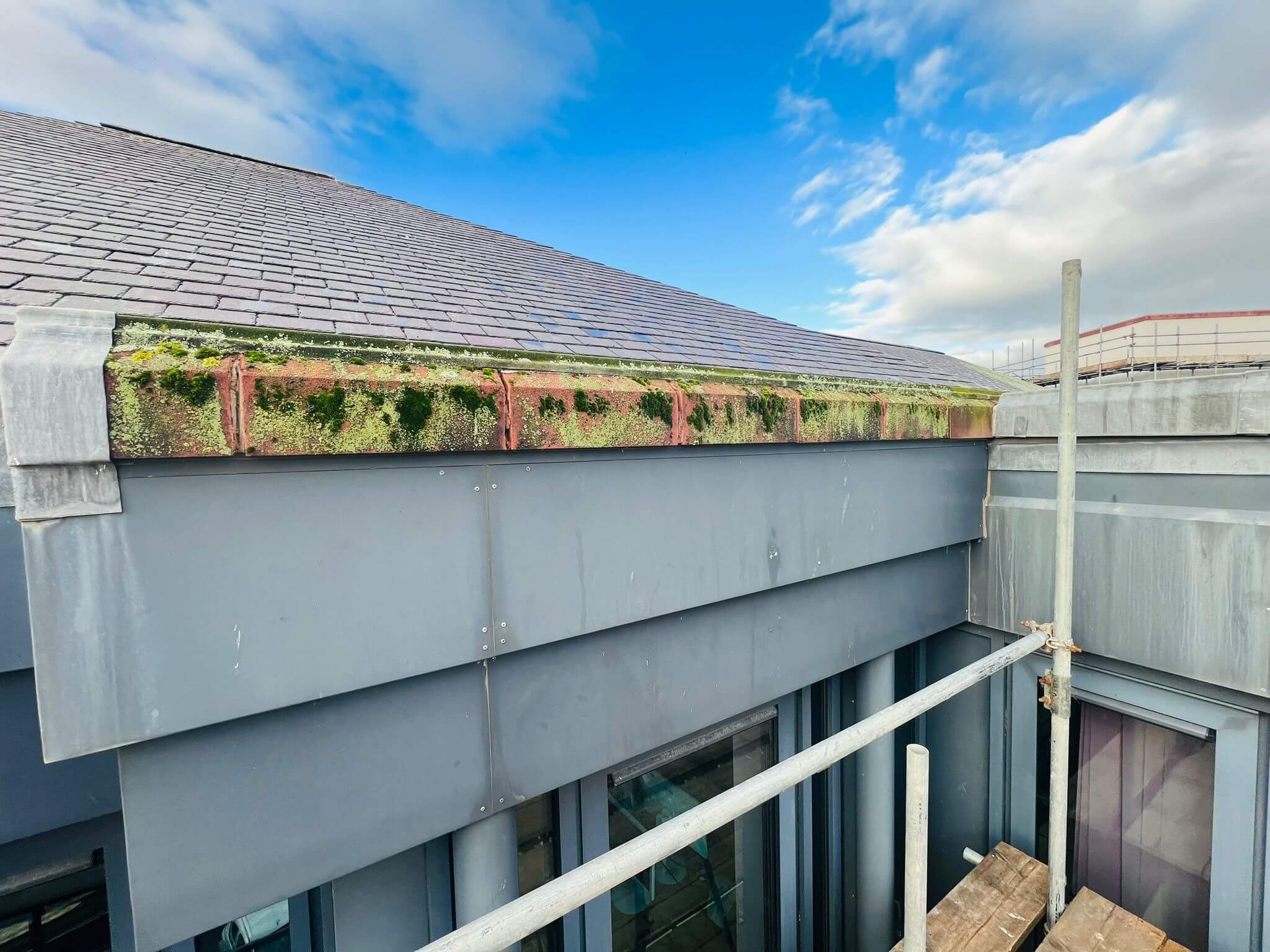
If you’re considering having your roof professionally cleaned, you may be wondering what actually happens during the process. Roof cleaning involves more than simply removing visible dirt or washing moss from the tiles. The roof covering, its condition, the type and extent of contamination, access requirements and surrounding property all need to be considered before the most appropriate cleaning method can be selected.
At Servos Exterior Cleaning, every professional roof cleaning project starts with an assessment rather than assuming the same process will be suitable for every property. Depending on what we find, cleaning can involve careful moss removal, low-pressure softwashing, specialist steam cleaning or an appropriate treatment. Here’s what you can generally expect when having your roof professionally cleaned.
Step 1: Assessing the roof
The first stage is to understand what we’re dealing with. Roof coverings can vary considerably, from natural slate and clay tiles to concrete tiles and other materials, while the age and condition of the roof can also influence how it should be approached. We assess the visible condition of the roof, the type and extent of contamination and the practical access requirements before recommending a cleaning method.
Moss, algae and lichen are some of the most common forms of organic growth we encounter, but the amount present can vary significantly. Some roofs have relatively light staining while others have thick moss growth covering substantial areas. Any obvious concerns with the roof can also be identified before cleaning begins so that they can be taken into account when planning the work. Where roofing repairs or specialist investigation are required, these should be dealt with appropriately rather than treating cleaning as a solution to an existing roof defect.
Step 2: Planning safe access and preparing the property
Once the roof and work required have been assessed, the next stage is planning how the roof will be accessed and how the surrounding property will be managed during cleaning. Working at height requires appropriate equipment and procedures, and the most suitable approach will depend on the height, layout and accessibility of the building.
Areas surrounding the property also need to be considered because moss, water and other debris can be displaced during cleaning. Depending on the project, this can include protecting or managing areas below the roof and considering gutters, paths, patios, driveways and other exterior surfaces. Professional preparation helps the cleaning work proceed efficiently while taking account of both the roof and the wider property.
Step 3: Removing heavy moss and debris
Where a roof has substantial moss growth, careful removal may be required before further cleaning or treatment takes place. Thick moss cannot always be dealt with effectively by simply applying a cleaning solution, and attempting to blast it away using excessive water pressure is not automatically an appropriate alternative.
The exact approach depends on the roof covering and its condition. Larger deposits can be carefully removed using suitable techniques before the remaining organic contamination is addressed. This stage can generate a considerable amount of debris on heavily affected roofs, which is why the areas below the roof and the guttering also need to be considered. Our guide on how to remove moss from a roof explains the subject in more detail.
Step 4: Selecting the appropriate cleaning method
Once heavy deposits have been dealt with, the appropriate cleaning method can be used to target the remaining contamination. There is no single method that should automatically be used on every roof. The material, age, condition and type of organic growth present all influence the approach we recommend.
Low-pressure softwashing may be suitable in some circumstances, while specialist steam cleaning can be appropriate for other surfaces and types of contamination. Treatments may also be used where appropriate to target remaining algae, lichen and other organic growth. The important point is that the method should be selected for the individual roof rather than simply using the most powerful equipment available.
This is particularly important when dealing with older or more delicate roof coverings. Natural slate, for example, needs to be assessed carefully before cleaning. Our guide to roof cleaning for slate roofs explains why roof material and condition should always influence the cleaning process.
Step 5: Why high pressure isn’t automatically the answer
A heavily contaminated roof can make a powerful pressure washer seem like the obvious solution, but more pressure does not necessarily mean better roof cleaning. Excessive or inappropriate pressure can be unsuitable for certain roof coverings and conditions, which is why professional roof cleaning should begin with an assessment rather than automatically choosing a pressure setting.
At Servos, we use cleaning methods selected according to the individual roof and contamination present. Where water pressure forms part of a cleaning process, it needs to be appropriate for the surface and circumstances. You can read more about this in our guide to why you should avoid high-pressure washing for roof cleaning.
Step 6: Cleaning gutters and surrounding areas
Moss and debris removed from a roof can often find their way into gutters, particularly where substantial growth was already present before work started. Leaves, loose moss and other material can also have accumulated naturally over time, so it makes sense to consider the guttering as part of the wider roofline.
Where required, professional gutter cleaning can be carried out alongside roof cleaning to remove accumulated material from gutters and help keep downpipes and drainage routes clear. Fascias and soffits can also be cleaned where appropriate, particularly where the aim is to improve the appearance of the complete roofline rather than only the tiles.
The surrounding property should also be left tidy following the work, with debris generated during the cleaning process removed from relevant areas.
Step 7: Reviewing the completed work
Once the cleaning process has been completed, the finished roof can be reviewed and any areas requiring additional attention identified. The final appearance will depend on the roof material, its age and condition and the type of contamination that was present before cleaning.
It is important to distinguish cleaning from repair work. Professional cleaning can remove moss, algae, lichen, dirt and staining where appropriate, but it does not repair cracked tiles, defective flashing, leaks or other roofing problems. If concerns are identified that fall outside the scope of exterior cleaning, they can be highlighted so the property owner can arrange appropriate roofing advice if necessary.
What happens after the roof has been cleaned?
A professionally cleaned roof will continue to be exposed to rain, moisture, airborne material and the surrounding environment, so it is unrealistic to claim that moss or algae will never return. How quickly organic growth becomes established again depends on factors including shade, surrounding trees, orientation, roof material and local conditions.
There is therefore no universal schedule for when every roof should be cleaned again. Monitoring its condition from a safe position at ground level is generally more useful than automatically arranging another clean after a predetermined number of years. Our guide explaining how often a roof needs cleaning looks at the factors that influence cleaning frequency in more detail.
Is the process different for commercial roof cleaning?
The same principle of assessing the roof before choosing a cleaning method applies to commercial buildings, but commercial projects can involve additional considerations. Larger roof areas, more complicated access, different roofing materials and the need to work around employees, customers or normal site operations can all affect how the project needs to be planned.
Servos provides commercial roof cleaning for businesses, property managers and organisations, including one-off cleaning and planned maintenance. Our guide to professional roof cleaning for commercial buildings also explains some of the additional safety and planning considerations involved with commercial properties.
Why use a professional roof cleaning company?
Roof cleaning combines specialist exterior cleaning with working at height, which makes experience, equipment and an understanding of different roof surfaces particularly important. A professional contractor can assess the roof before work begins, plan appropriate access and select a cleaning method according to the material, condition and contamination present.
Servos Exterior Cleaning has over 10 years of experience working on residential and commercial properties. Our team is professionally trained and fully insured, and we hold recognised industry accreditations including CHAS and SafeContractor. Most importantly, we don’t treat every roof in exactly the same way. The approach is determined by the property and the work required.
Contact Servos about professional roof cleaning
If your roof is affected by moss, algae, lichen or staining, contact Servos Exterior Cleaning for a free, no-obligation quote. Our experienced team provides residential roof cleaning across North Wales and the North West, alongside commercial roof cleaning for businesses and organisations.
Call 01745 289055 or email hello@servosuk.co.uk to discuss your property with our team.
Roof cleaning areas we cover
Servos provides professional roof cleaning for homes and businesses across North Wales and the North West. Our roof cleaning services are available throughout North Wales, Bangor, Chester, Wirral, Liverpool, Warrington, Northwich, Crewe, Macclesfield, Altrincham, Sale, Stockport and Bury, as well as surrounding areas.