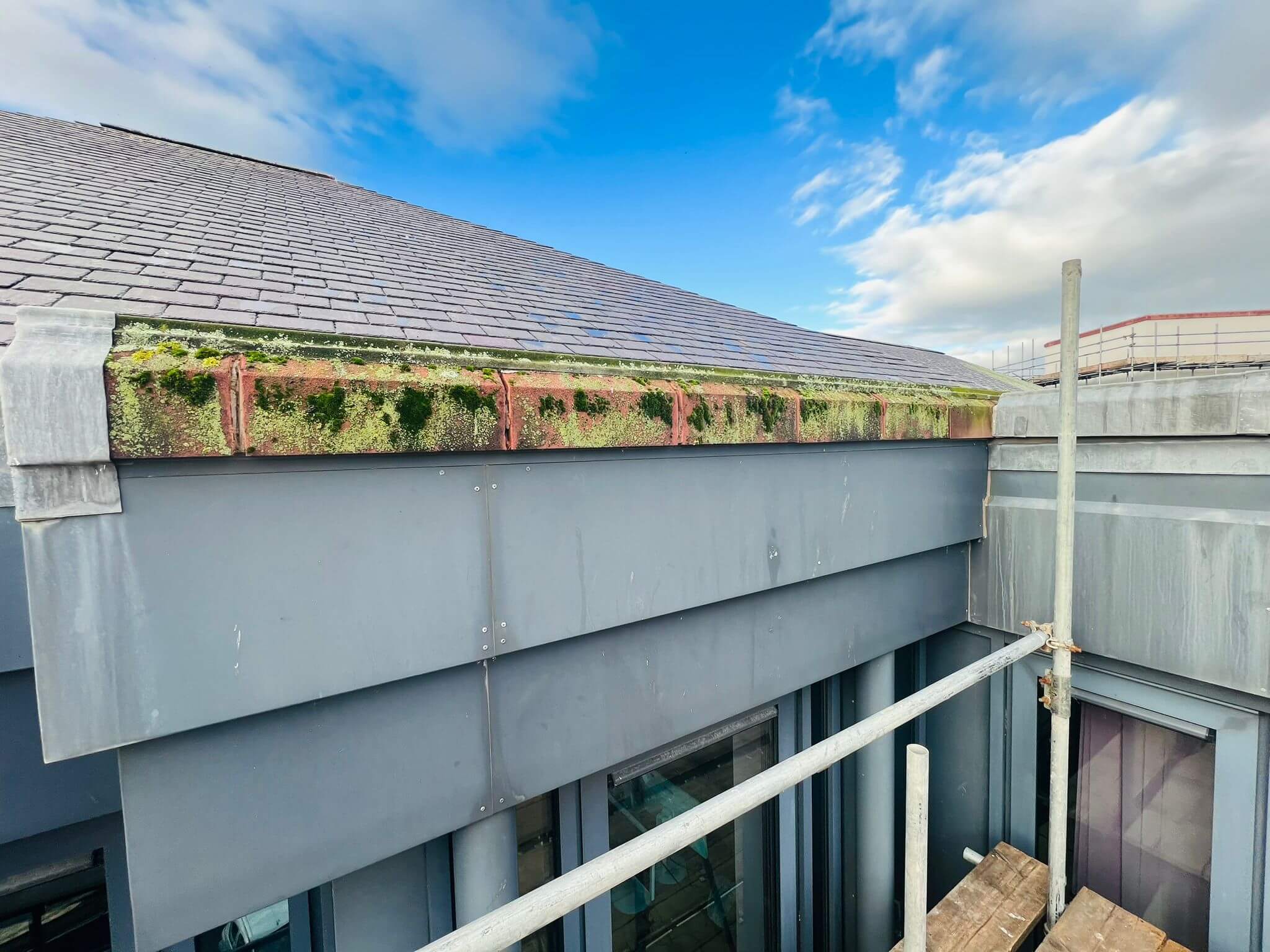
Moss is a common sight on roofs across the UK, particularly on properties surrounded by trees or where sections of the roof remain shaded and damp for long periods. Small patches may initially seem like little more than an appearance issue, but moss can gradually spread across roof tiles and create a considerable amount of loose organic material that eventually falls into gutters, downpipes and areas surrounding the property.
Removing moss from a roof requires more consideration than simply trying to wash it away. Roof material, condition, access and the extent of the growth all need to be taken into account before deciding how the roof should be cleaned. At Servos Exterior Cleaning, our professional roof cleaning service starts with an assessment of the roof so that an appropriate moss removal and cleaning method can be selected for the individual property.
Why does moss grow on roofs?
Moss thrives where moisture is available and surfaces remain damp for extended periods. This is why growth is often more noticeable on shaded sections of a roof, around properties surrounded by mature trees and on areas that receive less direct sunlight. Different sides of the same roof can sometimes have dramatically different levels of moss because of differences in shade, exposure and how quickly the surface dries following rainfall.
Once moss becomes established, it can gradually spread across the roof surface. Leaves, dirt and other organic debris can also collect in certain areas, creating conditions where further growth develops. The rate at which this happens varies considerably between properties, so there is no universal timetable for when moss will appear or when a roof will require cleaning.
Should moss be removed from a roof?
A small amount of moss does not automatically mean that a roof is damaged, but significant growth is worth addressing. Heavy moss can affect the appearance of the roof and, as sections loosen, material can fall into gutters, downpipes, patios, paths and driveways. Moss can also retain moisture against the roof surface, which is another reason substantial growth should not simply be ignored indefinitely.
Roof cleaning should not, however, be presented as a substitute for roof repairs. If tiles are already cracked, loose or displaced, or there are signs of a leak, those issues should be assessed appropriately. Professional moss removal is primarily about controlling organic growth and maintaining the roof surface rather than claiming that cleaning can correct existing structural problems.
How is moss professionally removed from a roof?
The appropriate method for removing roof moss depends on the roof covering, its condition and the extent of the growth. There is no single technique that should automatically be applied to every property, which is why the roof should be assessed before work begins.
Where significant moss has developed, careful physical removal may form part of the cleaning process. This allows larger deposits to be removed without relying on excessive water pressure to blast the moss from the surface. Depending on the roof, its condition and the remaining contamination, an appropriate treatment or cleaning process may then be used to address algae, lichen and residual organic growth.
Our guide to the professional roof cleaning process explains in more detail how a roof cleaning project can progress from the initial assessment through to moss removal, cleaning and completion.
Why shouldn’t you simply pressure wash roof moss?
It can be tempting to assume that the quickest way to remove moss is to use a powerful pressure washer. However, maximum pressure is not automatically the best or safest method for every roof covering. The age and condition of the roof, type of tiles and equipment being used all need to be considered before any form of pressure cleaning is carried out.
At Servos, we select the cleaning method according to the individual roof rather than using the same process on every property. Depending on the circumstances, this can include careful moss removal, low-pressure softwashing, specialist steam cleaning or an appropriate treatment. You can read more about this in our guide explaining why you should avoid high-pressure washing for roof cleaning.
Can moss be removed from slate roofs?
Moss can be removed from slate roofs, but the condition and characteristics of the slate need to be considered carefully before cleaning begins. Natural slate is common across North Wales and other parts of the UK, and older slate roofs in particular should not automatically be treated in exactly the same way as modern concrete or clay tiled roofs.
An assessment allows the cleaning contractor to consider the slate, fixings, general condition of the roof and amount of organic growth present before recommending an approach. If you have a slate property, our dedicated guide to roof cleaning for slate roofs explains the subject in greater detail.
What happens to moss after it is removed?
Roof moss can create a surprising amount of debris once it is removed, particularly on properties where growth has been allowed to accumulate for several years. This material needs to be managed rather than simply allowing it to collect around the property. Moss can fall onto driveways, patios, paths and gardens during cleaning, while existing loose material may already have accumulated inside the guttering.
For this reason, roof and gutter cleaning are often closely related. Where required, gutters can be cleared of moss, leaves and other debris as part of the wider project, while fascia and soffit cleaning can also be considered if the surrounding roofline would benefit from cleaning.
Can you clean moss off a roof yourself?
Removing moss from a roof is very different from cleaning surfaces at ground level. Roof work introduces risks associated with height, access, fragile or slippery surfaces, cleaning products and equipment. Attempting to walk across or work from an unsuitable roof can present a significant safety risk, particularly when moss and water make surfaces slippery.
There is also the possibility of damaging the roof by using an unsuitable cleaning method. For substantial moss growth, using an experienced and appropriately equipped contractor means the roof can first be assessed and the method selected according to the surface and condition. Professional roof cleaning also allows access, surrounding areas and the management of removed debris to be considered as part of the overall job.
How can you reduce moss returning?
It is unrealistic to promise that moss will never return after a roof has been cleaned. Roofs remain exposed to rainfall, moisture and airborne organic material, and properties surrounded by trees or with heavily shaded roof areas may naturally experience regrowth more quickly than others.
Keeping gutters clear and addressing overhanging vegetation where practical can form part of general exterior maintenance, while occasionally checking the roof from a safe position at ground level can help identify when moss is beginning to become established again. There is no fixed cleaning interval that applies to every property, so the condition of the individual roof is more important than following an arbitrary timetable. Our guide on how often a roof needs cleaning looks at the factors that influence how quickly a roof may need attention again.
Residential and commercial roof moss removal
Moss growth is not limited to residential properties. Servos provides roof cleaning for homeowners as well as businesses, property managers and organisations, with the requirements of each project assessed individually. Residential work commonly involves slate, clay and concrete tiled roofs, while commercial projects can include larger roof areas, different materials and more complex access requirements.
Our residential roof cleaning service is available across North Wales and the North West, while our commercial roof cleaning team works with businesses and organisations requiring one-off cleaning or planned exterior maintenance.
When should you have roof moss professionally removed?
If moss is becoming widespread across the roof, large pieces are regularly falling onto areas below or significant amounts of moss are collecting in the gutters, it may be worth having the roof assessed. Increasing algae, lichen and staining alongside the moss can also indicate that the roof would benefit from professional attention.
Servos has over 10 years of exterior cleaning experience, and our team assesses the roof covering, condition, access requirements and contamination before recommending a cleaning method. This allows us to approach each roof individually rather than applying the same process regardless of its material or condition.
Contact Servos for roof moss removal
If moss is taking over your roof, contact Servos Exterior Cleaning for a free, no-obligation quote. Our experienced team provides professional roof cleaning and moss removal for homes across North Wales and the North West, with commercial roof cleaning also available for businesses and organisations.
Call 01745 289055 or email hello@servosuk.co.uk to discuss your property with our team.
Roof cleaning areas we cover
Servos provides professional roof cleaning for homes and businesses across North Wales and the North West. Our roof cleaning services are available throughout North Wales, Bangor, Chester, Wirral, Liverpool, Warrington, Northwich, Crewe, Macclesfield, Altrincham, Sale, Stockport and Bury, as well as surrounding areas.