Render is a popular exterior finish for homes and commercial buildings across the UK. It provides a smooth, modern appearance while also helping protect the structure of a building from weather and environmental exposure. However, one of the most common complaints property owners have is that render can begin to look patchy, stained, or discoloured over time.
Whether it’s green streaks, dark staining, or uneven fading, render discolouration can significantly affect the appearance of a property. In many cases, the problem develops gradually and is caused by a combination of environmental conditions, organic growth, and pollution.
Understanding the causes of render discolouration is the first step in preventing it. With the right maintenance and professional cleaning methods, it is possible to restore render safely and keep it looking clean for longer. In this guide, we explore the most common reasons render becomes discoloured and how property owners can address the issue.
Why Render Discolouration Happens
Render is designed to be durable and weather-resistant, but it is constantly exposed to the elements. Rain, pollution, organic growth, and airborne debris all interact with exterior walls, gradually affecting their appearance.
Over time, these contaminants build up on the surface of render, causing visible staining. Because render is slightly porous, moisture and dirt can cling to the surface, making discolouration more noticeable, particularly on lighter-coloured finishes. The speed at which render becomes discoloured depends on several factors, including the building’s location, the surrounding environment, and the type of render used.
Algae Growth on Render
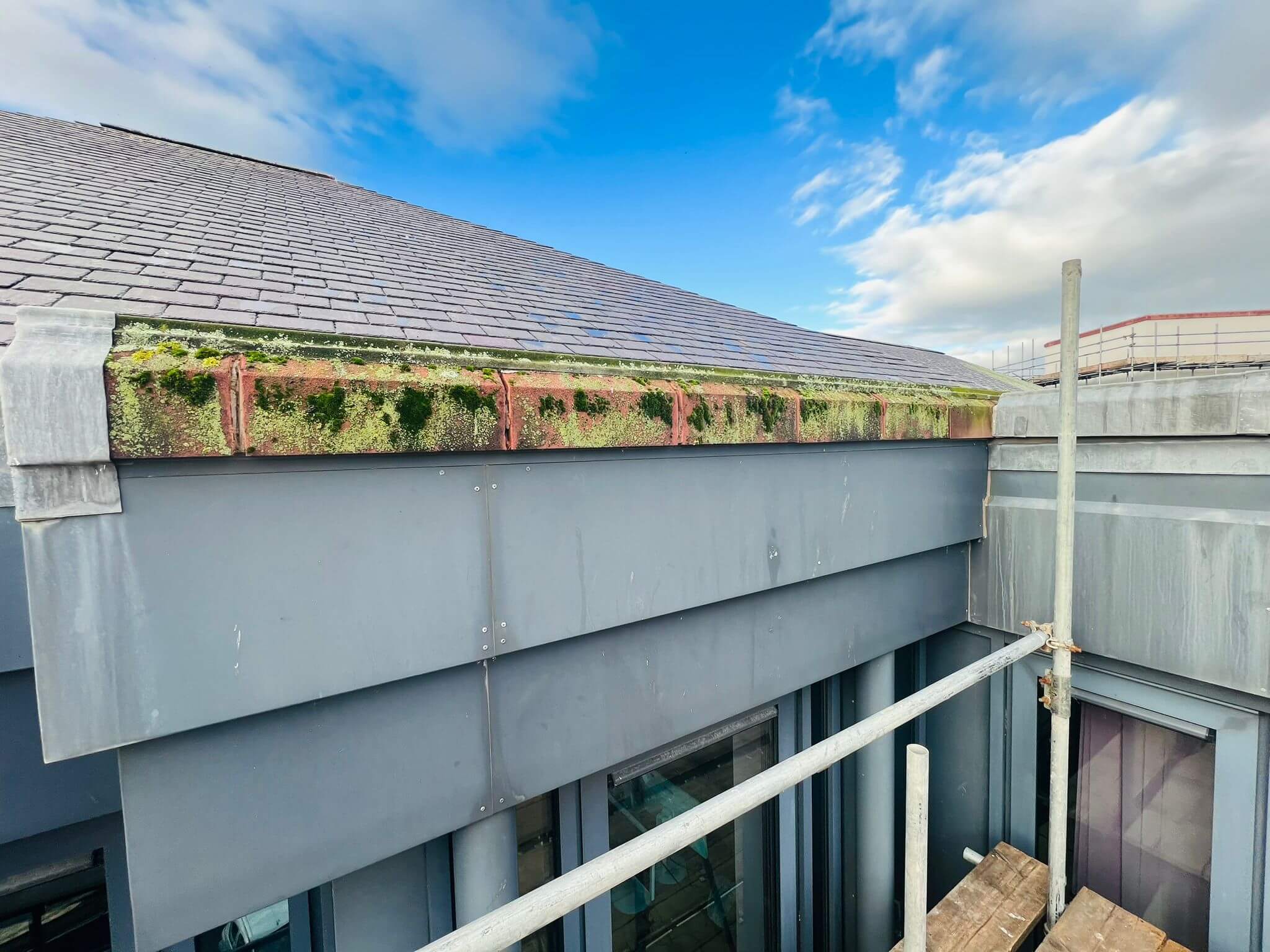
One of the most common causes of render discolouration is algae growth. Algae thrive in damp environments, and the UK’s climate provides ideal conditions for this type of biological growth. Green staining on render is usually caused by airborne algae spores that settle on exterior walls. Once established, they spread quickly in areas where moisture remains on the surface for extended periods.
Algae growth is particularly common on:
- North-facing walls that receive little sunlight
- Areas sheltered by nearby trees or buildings
- Properties in damp or coastal environments
If left untreated, algae can continue to spread across the surface of the render, creating uneven patches of green staining.
Moss and Lichen Development
Moss and lichen can also contribute to render discolouration. While moss is more commonly associated with roofs and paving, it can develop on render surfaces where moisture levels remain high. Lichen, which appears as small grey, white, or yellow patches, can attach itself firmly to render. These organisms grow slowly but can be difficult to remove once established. Both moss and lichen retain moisture against the wall surface, which can lead to further staining and deterioration if not addressed.
Pollution and Environmental Staining
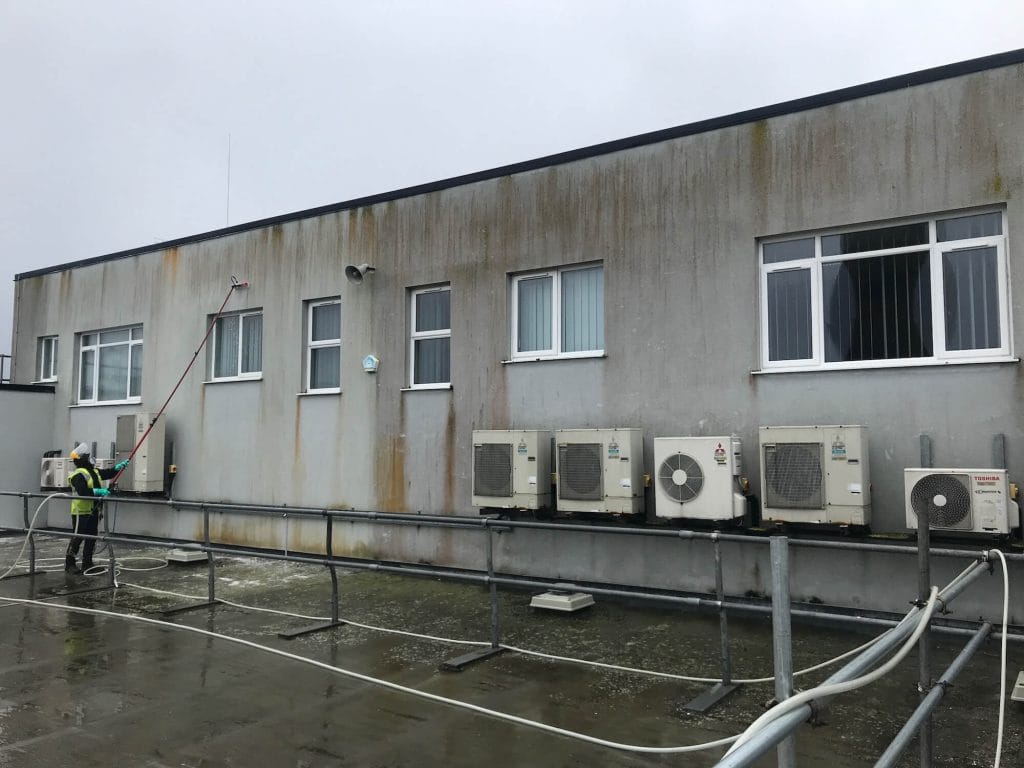
Urban pollution is another major cause of render discolouration. Traffic emissions, industrial pollutants, and airborne dust can settle on exterior surfaces over time. These contaminants often create dark streaks or grey staining, particularly in areas close to roads or busy town centres. Pollution staining is often more visible on light-coloured render, where dirt and carbon particles contrast strongly with the original finish. In many cases, rainwater runs down the wall carrying these pollutants with it, creating vertical streaking patterns that worsen the appearance of the render.
Weathering and Natural Ageing
Even high-quality render will change slightly in appearance as it ages. Exposure to sunlight, wind, and rain gradually alters the surface, sometimes causing uneven fading or patchy colour variations. Ultraviolet (UV) exposure from sunlight can also affect the pigments used in some render finishes, leading to subtle colour changes over time. While natural weathering is unavoidable, regular maintenance and cleaning can slow this process and help maintain a more consistent appearance.
Water Run-Off and Streaking
Water movement across the surface of a building often contributes to visible discolouration. When rainwater runs down walls, it can carry dirt, debris, and organic particles with it. This often leads to dark streaks forming beneath gutters, roof edges, window sills, or architectural features where water concentrates. Over time, these streaks become more noticeable and can give the entire façade a tired appearance.
Blocked gutters or poor drainage can make this problem worse by allowing excess water to spill over and run down exterior walls.
Iron and Mineral Staining
In some cases, render discolouration may be caused by mineral deposits. This can occur when water contains iron or other minerals that react with the surface. Rust staining sometimes appears beneath metal fixtures such as brackets, fixings, or railings. As rainwater flows over these areas, small amounts of rust can transfer onto the render surface. These stains are often more stubborn than organic growth and may require specialist cleaning methods to remove safely.
Poor Installation or Inconsistent Materials
Not all discolouration is caused by environmental factors. In some cases, the issue originates during installation. If render is applied inconsistently or mixed incorrectly, slight variations in colour may appear as the surface cures. Differences in drying conditions during installation can also cause patchiness. While these issues are less common, they can affect the overall appearance of a rendered wall and may become more noticeable over time.
Why Regular Render Cleaning Is Important
Once render discolouration appears, many property owners assume the surface needs repainting or replacing. In reality, professional render cleaning can often restore the original appearance safely and effectively. Cleaning removes organic growth, pollution, and staining that accumulate over time. This not only improves the look of the building but also helps protect the render surface from long-term deterioration. Regular maintenance can also prevent minor staining from becoming deeply ingrained, making future cleaning easier and more cost-effective.
The Safest Way to Clean Render
Because render surfaces can be delicate, the cleaning method used is extremely important. High-pressure washing may seem like a quick solution, but it can damage the surface or force water into small cracks.
Professional render cleaning typically uses softwashing techniques. Softwashing involves applying specialist cleaning solutions at low pressure to break down organic growth and staining. The surface is then gently rinsed, leaving the render clean without causing damage. This method is widely regarded as the safest and most effective way to restore rendered walls.
Preventing Future Render Discolouration
While some discolouration is inevitable over time, several steps can help slow the process. Keeping gutters and drainage systems clear prevents water from running down exterior walls. Trimming back nearby trees improves airflow and reduces shade, which can discourage algae growth.
Periodic professional cleaning is also one of the most effective ways to maintain render appearance. By removing contaminants before they become deeply embedded, property owners can extend the life of the render and preserve the building’s kerb appeal.
Restore Your Render Safely and Professionally
Render discolouration is a common issue for properties across the UK, particularly in areas with damp climates and environmental pollution. Algae, moss, pollution, weathering, and water run-off can all affect the appearance of exterior walls over time.
The good news is that in many cases, discoloured render can be safely restored with professional cleaning. Using the right techniques helps remove staining without damaging the surface, bringing back the original look of the property.
If your render is looking tired, patchy, or stained, professional cleaning could make a dramatic difference.
Servos Exterior Cleaning provides specialist commercial render cleaning and residential render cleaning services designed to safely restore exterior walls and protect them long-term. Our experienced team uses proven softwashing techniques to remove algae, staining, and pollution without damaging the render surface.
To arrange a free quote or discuss your render cleaning requirements, call 01745 289055 or email hello@servosuk.co.uk today.